Mental Acuity: A Guide to Staying Mentally Sharp
Major Takeaways
- Mental acuity, your ability to focus, process information, retain memory, and make sound decisions, naturally declines with age, poor sleep, and chronic stress, but it can be actively supported through consistent lifestyle habits.
- Five research-backed practices that sharpen mental acuity: prioritizing 7–9 hours of sleep, regular aerobic exercise, a nutrient-rich low-sugar diet, daily mindfulness or meditation, and intentional cognitive rest throughout your day.
- Clinically-backed ingredients like Lion's Mane, Ashwagandha, L-Theanine, and Cognizin® are shown to support focus, memory, and cognitive performance; and delivery format matters, as liquid nano-encapsulated formulas absorb up to 5x more effectively than pills or powders.
Updated April 2026 | 6 min. read | * Verified by a US-based board-certified doctor.
Your brain is your most important performance tool. It drives every decision you make, every task you complete, and every goal you pursue. And yet, most people don’t actively work to keep it sharp.
Mental acuity, your brain’s ability to think quickly, focus clearly, and retain information, isn’t fixed. It’s something you can actively support, protect, and improve. Whether you’re a founder navigating high-stakes decisions, a creator trying to stay in flow, or a professional managing a packed schedule, understanding your mental acuity is the first step to performing at your best.
Here’s what mental acuity actually is, what affects it, and how to keep yours as sharp as possible.
What is mental acuity?
Mental acuity refers to the overall sharpness of your mind; how well you process information, retain it, focus on what matters, and make sound judgments. Think of it as the combined output of four core cognitive functions:
Information Processing
This is your brain’s speed and efficiency at taking in, organizing, and using information. It underpins almost every cognitive task you perform, from reading an email to evaluating a complex business problem.
Memory
Memory isn’t just about recalling names and dates. It’s about your brain’s ability to store and retrieve the right information at the right time. Both short-term working memory and long-term recall matter for daily performance.
Attention and Focus
Your ability to direct and sustain attention, especially in the face of distraction, is central to cognitive performance. Practices like mindfulness and meditation are well-documented in research for supporting sustained attention over time.
Situational Judgment
Sound decision-making under pressure is a hallmark of a sharp mind. Situational judgment, your ability to read a context and choose the best course of action, depends heavily on the three functions above working together.
These aren’t independent skills. They build on each other. A brain that processes information quickly retains it more effectively. Better memory supports sharper judgment. And focused attention makes all of it work better.

What causes mental acuity to decline?
Mental acuity can decline for a range of reasons, some within your control, some not. Understanding them helps you know where to focus your efforts.
Age
Cognitive processing naturally slows with age. But this isn’t inevitable deterioration, research consistently shows that lifestyle interventions can meaningfully slow cognitive aging and support long-term brain health.
Poor sleep
Sleep is when your brain consolidates memory, clears metabolic waste, and repairs itself. Chronic sleep deprivation is one of the most significant contributors to impaired focus, slower processing, and weakened recall.
Chronic stress
Sustained high cortisol levels, the hallmark of unmanaged stress, can impair memory formation and reduce cognitive flexibility over time. Managing your stress response isn’t just good for your mental health; it’s critical for your cognitive performance.
Lifestyle and nutrition
A sedentary lifestyle, poor diet, and inadequate hydration all negatively affect brain function. Conversely, regular physical activity, a nutrient-rich diet, and good hydration are consistently linked to better cognitive outcomes.
Poor blood circulation
Your brain demands a constant supply of oxygenated blood. Anything that impairs circulation, physical inactivity, cardiovascular issues, or dehydration, can reduce cognitive performance over time.
Genetics
Some people carry genetic risk factors for neurodegenerative conditions. While these can’t be reversed, the same healthy lifestyle practices that support general cognitive function may help delay or reduce their impact.
Drugs or medications
Both legal and illegal drugs can alter your mind permanently, sometimes contributing to a mental decline over time. Many prescription medications can lower acuity in the short term, but the benefits are likely more important than a temporary drop in mental acuity.
Environmental factors
External factors can affect our mental acuity as well, such as our air and water quality. Studies have shown that access to poor qualities of sunlight, air, and water can lead to mental degeneration.

5 research-backed ways to sharpen your mental acuity
The good news: mental acuity responds well to consistent, targeted effort. Here are five practices that are backed by research and worth building into your routine.
1. Prioritize sleep
Sleep is the single most powerful cognitive recovery tool available to you. During deep sleep, your brain consolidates memories, flushes waste products linked to cognitive decline, and restores the neural pathways you rely on for focus and clarity.
Aim for 7–9 hours. Practical steps: set a consistent sleep and wake time, cut caffeine after 2pm, and limit screen exposure in the hour before bed.
2. Move your body
Exercise is one of the most well-documented ways to support brain health. Aerobic activity increases blood flow to the brain, supports the growth of new brain cells in memory-related regions, and helps regulate your stress response. Even a 20–30 minute walk has measurable effects on focus and mood.
Aim for at least 150 minutes of moderate aerobic activity per week; and don’t underestimate the power of a midday walk.
3. Eat for your brain
Your diet directly affects your cognitive function. Diets high in refined carbohydrates and sugar can cause blood sugar spikes that cloud thinking and impair focus. In contrast, diets rich in omega-3 fatty acids (found in fatty fish, walnuts, and flaxseed), antioxidants (berries, leafy greens), and healthy fats support sharper, more sustained cognitive performance.
Focus on whole foods, minimize ultra-processed options, and stay hydrated throughout the day.
4. Practice mindfulness or meditation
Meditation is one of the most effective tools for training your attention. Research shows regular mindfulness practice can support sustained focus, working memory, and emotional regulation, all of which feed directly into cognitive performance.
You don’t need hours. Even 10–15 minutes of daily practice adds up. If you’re new to it, a guided meditation app is a great starting point.
5. Give your brain intentional rest
Cognitive fatigue is real. Sustained mental effort without recovery leads to diminishing returns, and eventually burnout. Scheduling deliberate breaks throughout your workday (the Pomodoro method is popular for a reason) helps your brain consolidate what it’s learned and return to tasks with more clarity.
Quick Sidebar: Does blue light affect your mental acuity?
Blue light is part of the light spectrum and usually refers to light traveling at short wavelengths. Some studies show that exposure to blue light can help you feel more alert and focused. It can also help you process and retain information more effectively.
The problem is that too much blue light can do the opposite. Most people know that staring at screens can disrupt your sleep. Well, this is because there’s a lot of artificial blue light that suppresses the release of a key sleep hormone. So, how do you find the right balance and gain the brain benefits of blue light?
It’s simple: get natural blue light by going outside, as it is produced by the sun. Walk around for a few minutes during the day, and you naturally reap the benefits. Then, when you’re looking at screens, wear blue light blocking glasses. Now, you can sleep normally but gain rewards from the sun’s blue light.
How clinically-backed ingredients support mental acuity

Beyond lifestyle, certain natural ingredients have been studied for their ability to support cognitive function. Here’s what the research says about some of the most well-established options:
-
Lion’s Mane mushroom: studied for its role in supporting neuroplasticity and cognitive function. Research suggests it may help support memory and mental clarity.
-
Ashwagandha: an adaptogen shown to help balance the stress response, which in turn may support cognitive resilience and mental performance under pressure.
-
L-Theanine: found naturally in green and matcha tea, L-Theanine encourages relaxation with drowsiness and supports focus, especially when paired with caffeine.
-
Ceremonial-grade Matcha: provides time-release natural caffeine paired with L-Theanine for smooth, sustained mental energy without the crash of coffee.
-
Bacopa Monnieri: a botanical long used in Ayurvedic practice, Bacopa has been studied for its potential to support memory and learning.
-
Cognizin ® (Citiocoline): shown in research to support ATP production in brain cells, essentially fueling your brain's natural energy supply.
-
Turmeric (Curcumin): supports a healthy inflammatory response and is being studied for its potential protective effects on brain health over time.
Adding these ingredients to your diet can help nourish your brain and boost your mental sharpness. Your memory will improve, as will your ability to concentrate on tasks without getting distracted.
Related: Magic properties, Real ingredients.
The key with any supplement is bioavailability, how much of the active ingredient your body actually absorbs. That’s why delivery format matters. Liquid nano-encapsulated formulas, like the one used in Magic Mind, are shown to offer significantly better absorption than traditional pills or powders.
How Magic Mind supports mental acuity
Magic Mind is a daily 2oz mental performance drink built around the ingredients above, vitamins, amino acids, adaptogens, and clinically-backed cognitive-support compounds like Lion’s Mane, Ashwagandha, Bacopa Monnieri, and Cognizin®.
What sets it apart is the delivery. Magic Mind’s nano-encapsulated liquid formula is designed to absorb active ingredients 5x more effectively than pills and powders, so your brain gets more of what it needs, faster.
The formulas are designed to address the three pillars of cognitive performance:
-
Mental performance: sharpen focus, cognition, and recall with clinically-backed ingredients.
-
Sustained energy: time-release caffeine from ceremonial-grade matcha, plus energy-supporting adaptogens like Rhodiola Rosea and Cordyceps, for mental stamina without crashes.
-
Brain health: neurosupportive antioxidants and vitamins that protect and optimize long-term brain function.

Magic Mind comes in four formulas:
-
Magic Mind Original: 55mg of natural caffeine (roughly half a cup of coffee) with the full cognitive-support stack.
-
Magic Mind FREE: all cognitive support, zero caffeine, zero sugar.
-
Magic Mind MAXX: 165mg of time-release natural caffeine and the highest concentration of clinically-backed ingredients for extended peak performance.
-
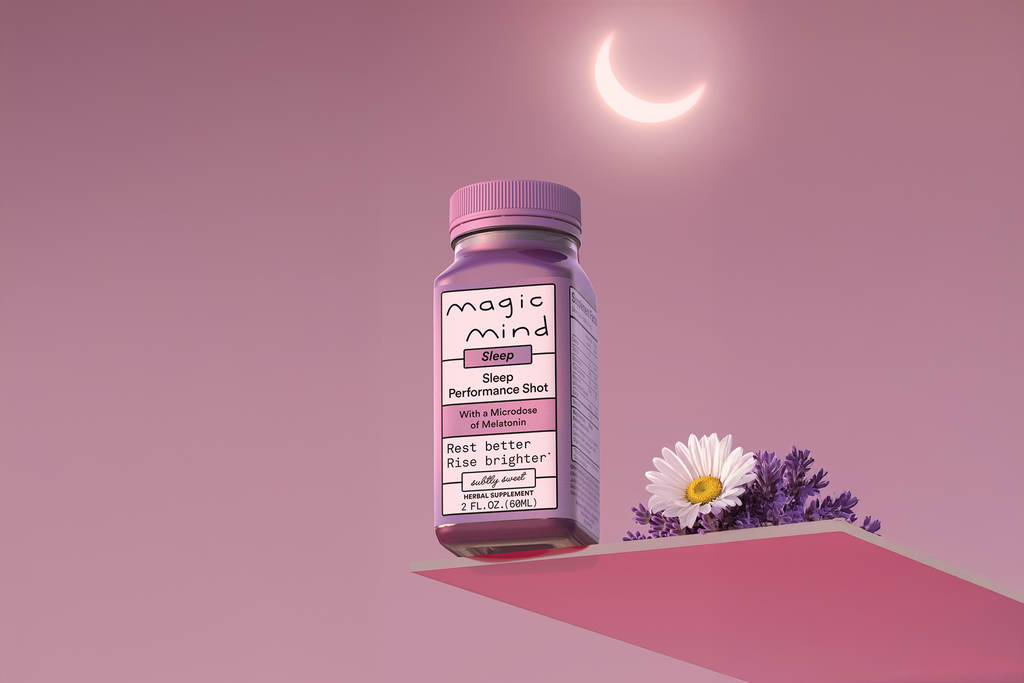
Magic Mind Sleep: a nightly 2oz shot with L-Theanine, Magnesium Glycinate, and microdosed Melatonin to support deeper, more restorative sleep.
The bottom line
Mental acuity isn’t something that just happens to you, it’s something you build and protect. Sleep, movement, nutrition, mindfulness, and the right cognitive-support compounds all play a meaningful role.
For ambitious people who need their mind to perform at its best every day, these aren’t optional habits. They’re the foundation.
Want to go deeper? Explore Magic Mind’s full lineup of mental performance drinks, designed to sharpen focus, sustain energy, and support long-term brain health, one 2oz shot at a time.
Sharper mind. Sustained energy.